
Empowering energy independence.
It is the line at the top of our home page, so it should mean something specific rather than sound good. Here is what it buys you in Michigan, in order, and where it stops.
Independence is not one thing you buy. It is four layers, and they are not equally worth having. Most homeowners get most of the benefit from the first two, which are also the cheapest. The third is the one everyone assumes is included, and it is not.
- 01
Generate your own
The first and largest step. Every kilowatt-hour your roof makes and your house uses at that moment is one you do not buy, at full retail price. This is where most of the value lives, and it needs no battery and no special equipment.
- 02
Fix your cost against rising rates
A utility rate is a variable you do not control and which has only moved one direction. An owned array converts twenty five years of that variable into a fixed, already-paid cost. Independence here means independence from the rate case, not from the wires.
- 03
Keep the critical loads running
This is the layer that needs a battery, and it is the one people assume comes free with solar. It does not. With storage and the right inverter, the house disconnects from the grid during an outage and runs on stored energy while the array recharges it in daylight.
- 04
Electrify what you can
A heat pump or an EV moves spending from fuel you buy to electricity you can generate. It also raises your consumption, which raises the system size the rules allow you to build. Planning them together is materially cheaper than doing them in sequence.
Grid-tied solar alone does not keep your lights on.
When the grid goes down, a standard grid-tied array shuts down with it. Not because of a fault in your system, but by design and by code: the inverter must stop back-feeding the lines so that a lineman working on your street is not working on an energized conductor. It is called anti-islanding, and it is not optional.
So on a sunny afternoon during an outage, a house with panels and no battery sits in the dark alongside the house without them. If nobody has told you that before, it is worth asking why.
Backup requires storage and an inverter that can island. That is a real cost and a real decision, and whether it earns its place depends on how often your power actually goes out and what is in your house that cannot go down. We would rather scope that honestly than sell you a battery you did not need.
What full independence would actually take
True off-grid in Michigan means sizing for the worst week of the year, not the average one. A cloudy stretch in December, with the shortest days and the highest heating load, sets the requirement. Building for that means a much larger array, a much larger battery, and usually a generator anyway.
For a house that already has utility service at the road, it almost never pencils out. The grid is a very cheap battery when you are allowed to use it. The version worth buying is the one where you generate most of your own energy, fix your cost, and ride through outages on the loads that matter — not the one where you cut the wire for the principle of it.
Where it does change is a site with no service at the road, where the cost of a utility extension is quoted in tens of thousands of dollars. Then off-grid stops being ideological and starts being arithmetic. If that is your situation, tell us the extension quote and we will work from there.
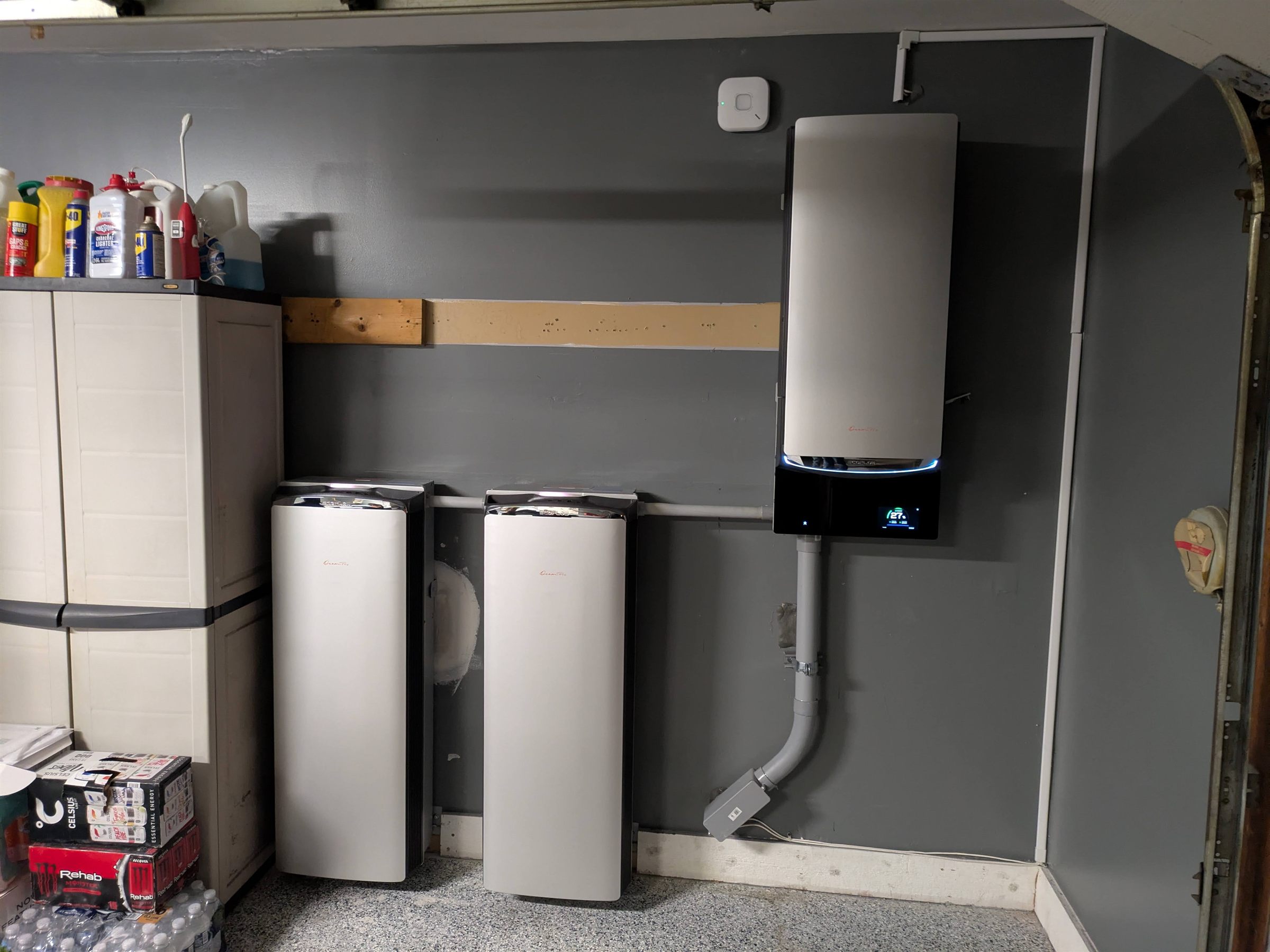
Backup, scoped to what you need running.
Whole-home backup and critical-load backup are different budgets. A panel that keeps the furnace, the well pump, the fridge and the internet alive through a two-day outage is a far smaller system than one that also runs the range and the air conditioning.
We scope which circuits matter to you before sizing the battery, rather than quoting a product and working backward.
Want to know which layers make sense for you?
Send us twelve months of usage and we will model it against your roof, your utility, and how often your power actually goes out.