
Commercial solar, scoped from your utility bill up.
The federal investment tax credit is still available to businesses even though the residential version ended. For a building with roof area sitting idle, that changes the arithmetic in a direction worth checking.
Most commercial solar proposals lead with a percentage. Ours leads with your bill, because the percentage is downstream of a dozen things specific to your building and the proposal is worthless if any of them are wrong.
Anywhere in Michigan. We are based in West Michigan and that is where most of our residential work is, but a commercial project justifies the drive. We have worked the east side of the state and the Upper Peninsula. If you have a roof or a site worth looking at, distance is not what decides it.
What we look at
-
Demand charges, not just kWh
Commercial bills often carry a demand charge based on your highest 15 minute draw in the billing period. Solar reduces energy charges reliably and demand charges only sometimes, depending on when your peak occurs. Any analysis that treats your bill as one number is skipping the part that determines your payback.
-
Rate structure and time of use
What your utility charges, and when, changes what an array is worth. A building that peaks at 2pm in July gets more value from a south or west facing array than the same building peaking at 7am.
-
Roof condition and remaining life
A twenty five year asset should not go on a roof with eight years left. We look at membrane type, age, and warranty before design, and we coordinate with your roofer so the array does not void anything.
-
Interconnection at commercial scale
Larger systems sit in different tiers of Michigan’s distributed generation program, with different crediting and different utility review. This is often the longest pole in the schedule, and it is worth starting early.
-
Ownership and the tax position
The federal investment tax credit and depreciation both follow ownership. Which structure is right depends on your tax position, so this is a conversation for you, us, and your accountant together.
-
Operations during construction
Your building keeps running. Staging, roof access, electrical shutdown windows, and safety planning get scoped before we start rather than negotiated on the day.
Agave Ventures
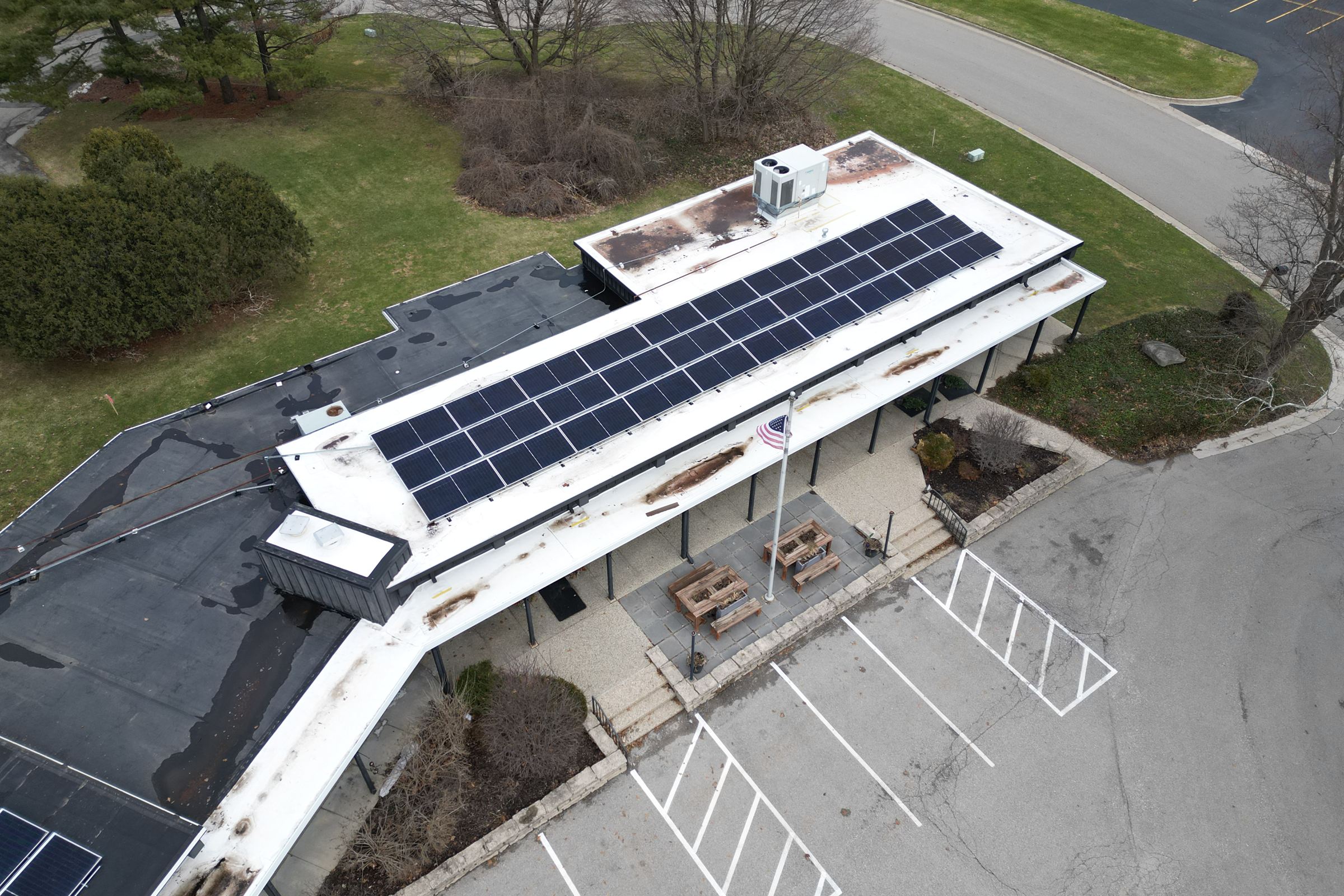
A commercial rooftop array on Cascade Road, taken from site survey through engineering, permitting, utility interconnection, and into production monitoring. Ballasted racking on a flat membrane roof, coordinated against the existing roof warranty.
We are a small firm and we say so plainly: this is our completed commercial portfolio rather than a selection from it. You get the two owners on your project rather than a regional rep, and if your project is bigger than we should be taking on, we will tell you before you spend time on it.
Buildings we scope
- Manufacturing and industrial
- Warehouse and distribution
- Office and professional
- Retail and hospitality
- Agricultural buildings
- Churches and nonprofits
- Schools
- Municipal buildings
What you get back
- System size and layout on your actual roof or site
- Modeled annual production, month by month
- The equipment list by make and model
- How it lines up against your current energy and demand charges
- The assumptions behind all of it, in writing
If it does not pencil out on your building, we will tell you that, and it will not cost you anything to have found out.
Related reading: where incentives stand in 2026 and how Michigan credits exported energy.
Send us twelve months of bills.
We will come back with a scoped system, a modeled production number, and the assumptions in writing.