
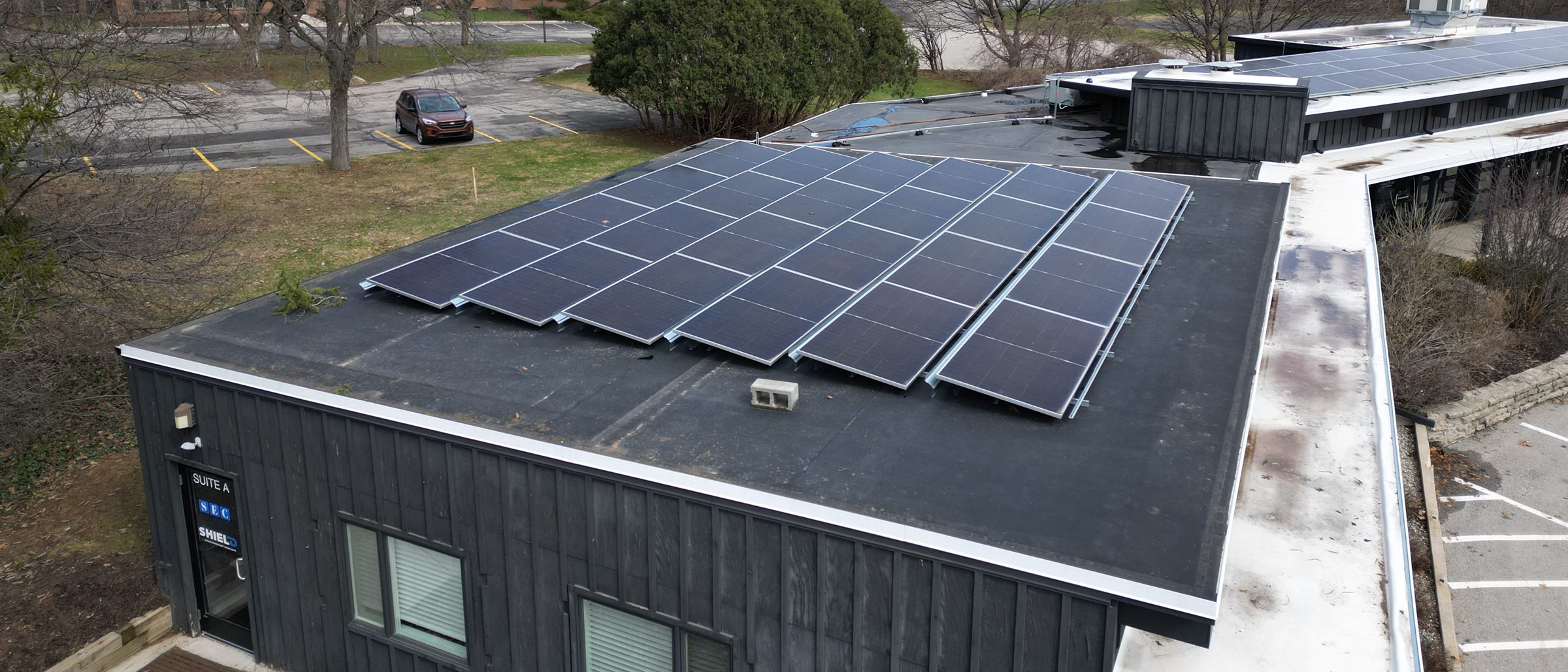
Commercial
Scoped from your utility bill up, not down from a panel count. The federal tax credit is still available to businesses.
- Flat roof, ground mount, carport
- Demand charge analysis
- Commercial financing
Homeowners
A system sized to twelve months of your real usage, installed by the people who designed it.
- Roof and ground mount
- Battery backup
- Michigan Saves financing
Solar has to make sense.
Four ways a system has to hold up before we will put it on your roof. Miss any one of them and it is not a system worth owning.
-
Aesthetically.
Your roof is the first thing anyone sees. We lay the array out so it looks deliberate: straight edges, balanced planes, conduit run out of sight. If the only way to fit two more modules is to make the roof look like an afterthought, we leave them off.
-
Financially.
Sized to twelve months of your real usage and priced against what you actually pay now. You see the production model and the payback before you commit, and if it does not pencil out on your roof, we tell you that instead.
-
Structurally.
The roof has to carry the array for twenty five years. We check its condition and age before we quote, flash every penetration, and we will tell you if the roof should be replaced first rather than build on top of a problem.
-
Electrically.
Permitted, inspected, and monitored per module. Clean conduit runs, labeled disconnects, and a system any electrician who opens the panel after us can read without guessing.
Your roof is the cheapest real estate you own.
For a business, solar is a fixed asset replacing a variable operating cost. That math got more attractive this year, not less: the federal investment tax credit is still available to commercial projects even though the residential version ended.2
We scope commercial work from the utility bill up. Demand charges, rate structure, interconnection with your utility, roof condition, and the actual payback period on your building. You get the assumptions in writing, not a headline percentage.
We are a small firm and we say so. You get the two owners on your project rather than a regional rep, and we have the engineering, crew, and vendor relationships to take on real commercial work. If your project is bigger than we should be taking on, we will tell you before you spend time on it.
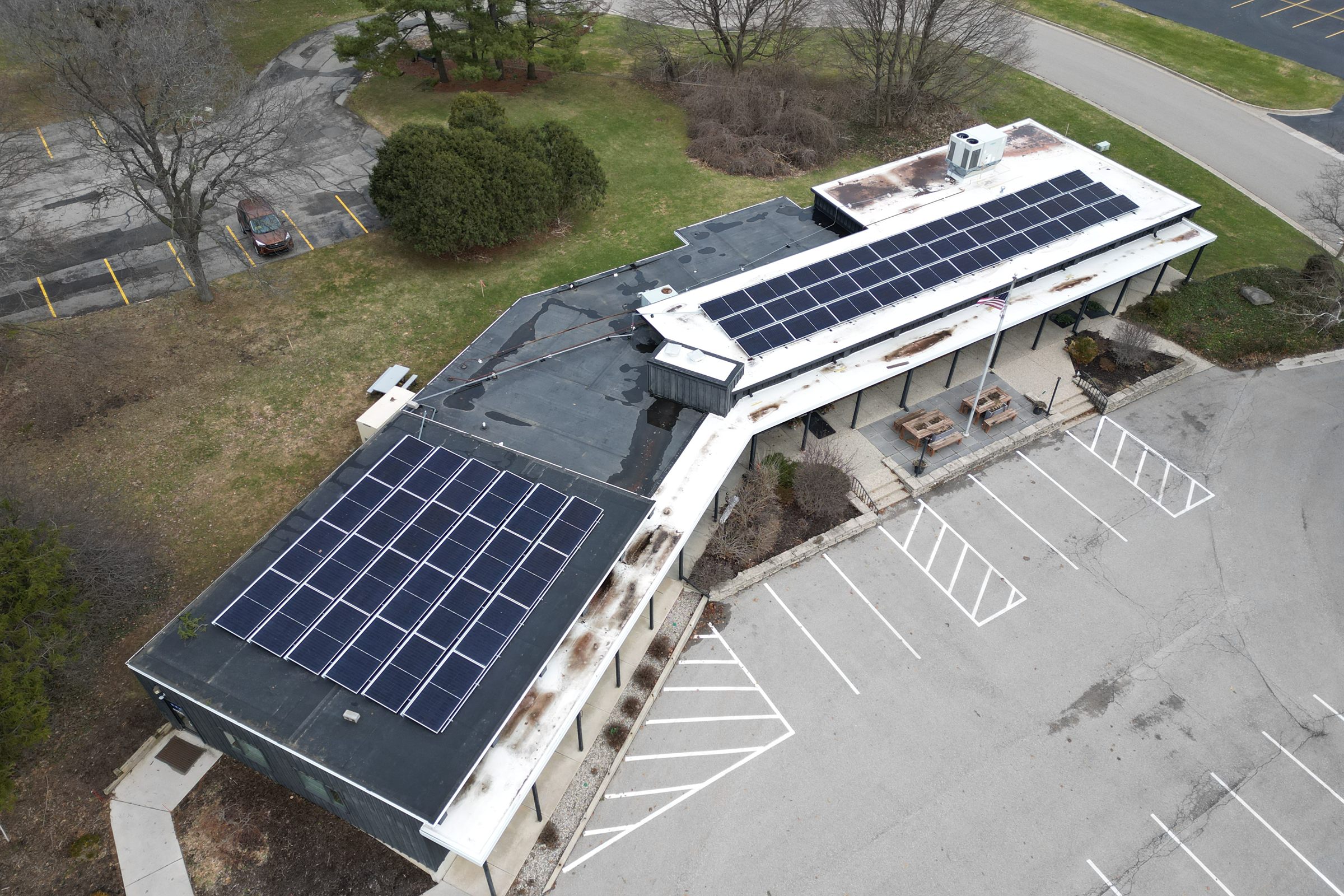
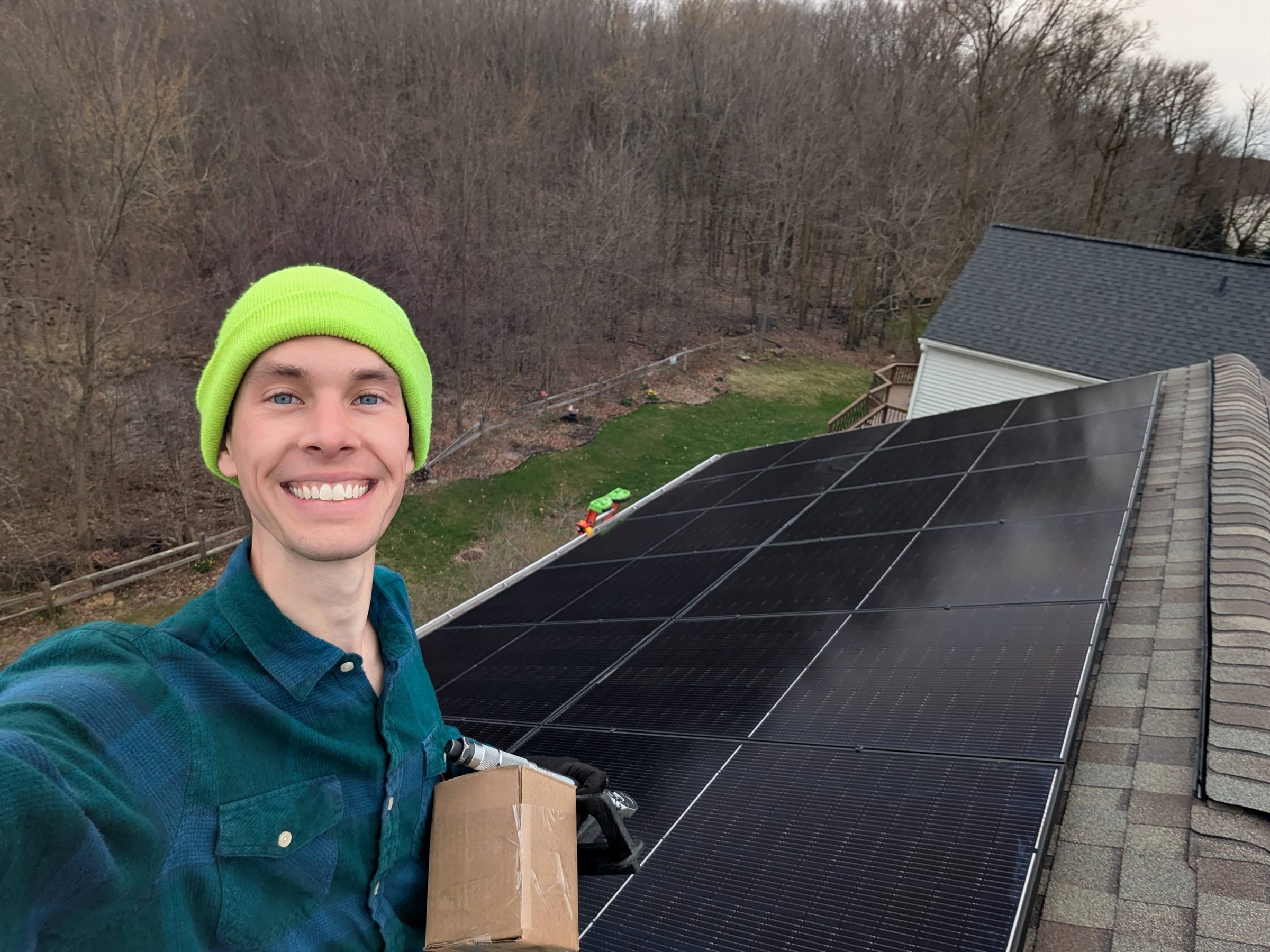
Sized to your house, not to a sales target.
Every design starts with twelve months of your actual usage. Not your square footage, not a guess off a satellite photo, and not whatever size grows a commission.
We look at your roof planes, your shading, and what you actually pay Consumers Energy or Great Lakes Energy today. Then we show you the production model and the price side by side, and you decide.
If the numbers do not work on your roof, we will tell you that too.
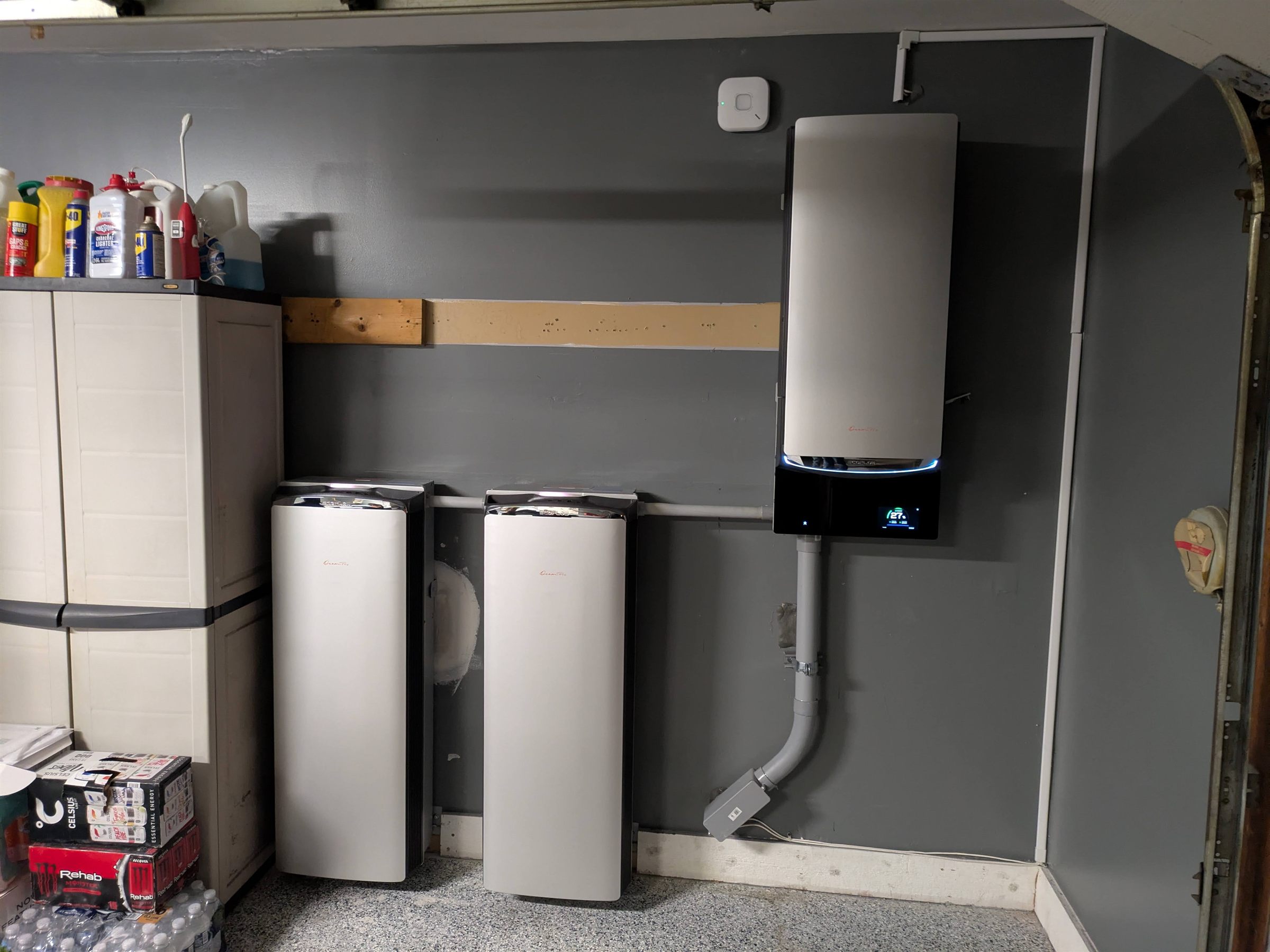
Keep the well pump running when the line goes down.
Out here a grid outage is not theoretical. If you are on a well, run a home office, or keep medical equipment plugged in, storage is the part of the system that earns its keep.
Backup changes the electrical design, so it is worth deciding early rather than bolting on later. We design battery-ready systems either way, and we retrofit storage onto arrays that are already up, including ones we did not install.
Tell us which circuits have to stay alive and we will size around those.
- Have a business with a football field of a roof? We can energize it.
- Have a shop with an unlimited energy demand? We can help offset it.
- Have a home with unreliable power? We can stabilize it.
- Have an airport with extra land? We are ready to turn it into a community solar array.
Not sure where you land? Send us a bill and we will tell you straight.
Solar, storage, or both.
Most of this comes down to whether outages matter to you and whether you already have an array on the roof. Here is the short version.
| Feature | Solar only | Solar + battery | Battery retrofit |
|---|---|---|---|
| Lowers your electric bill | Yes | Yes | Limited |
| Powers critical loads in an outage | No | Yes | Yes |
| Works with an existing array | — | — | Yes |
| Relative install cost | Lowest | Highest | Middle |
| Roof work required | Yes | Yes | No |
| Best for | Stable grid, bill reduction is the goal | Rural service, well pump, home office, medical loads | You already have solar and want backup |
Not sure which column you are in? Send us a bill and we will tell you. Get a free estimate
Somebody else installed it. It is not working right.
Panels that stopped reporting. An installer who stopped answering. Production that never matched what the proposal promised. We get these calls, and we take them.
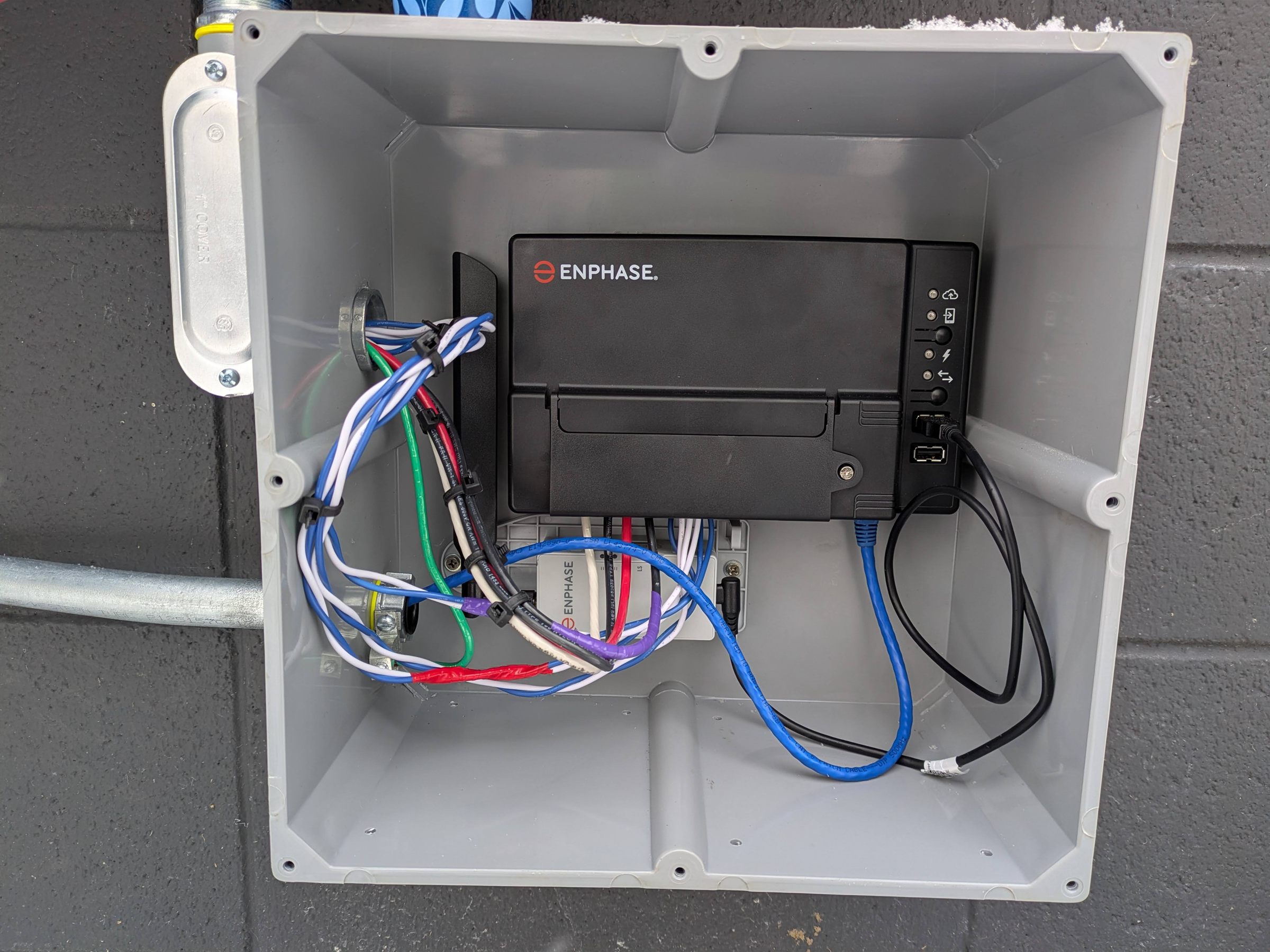
We will pull the monitoring data, get on the roof, and tell you what is actually wrong, whether that is a failed microinverter, a wiring fault, shading nobody modeled, or a system that was oversized on paper from the beginning.
Then you get the repair scope and the number. Whoever installed it originally is not our concern, and it does not have to be yours either.
The honest version.
The 30% federal tax credit for homeowner-owned systems expired on December 31, 2025. It did not step down to 26% and then 22%. It ended.1 Plenty of solar companies are still running ads that say otherwise.
Businesses can still claim the federal investment tax credit, and that is a real reason to move a commercial project this year rather than next.2
In Michigan, energy you export to the grid is credited below the retail rate, and systems are sized against your own use — up to 110% of your last twelve months, with residential capped at 550 kW.3 That makes correct sizing worth more than it used to be, which is the part we are good at.
We would rather lose a sale than quote you against a credit you cannot claim.
You do not have to pay for it all up front.
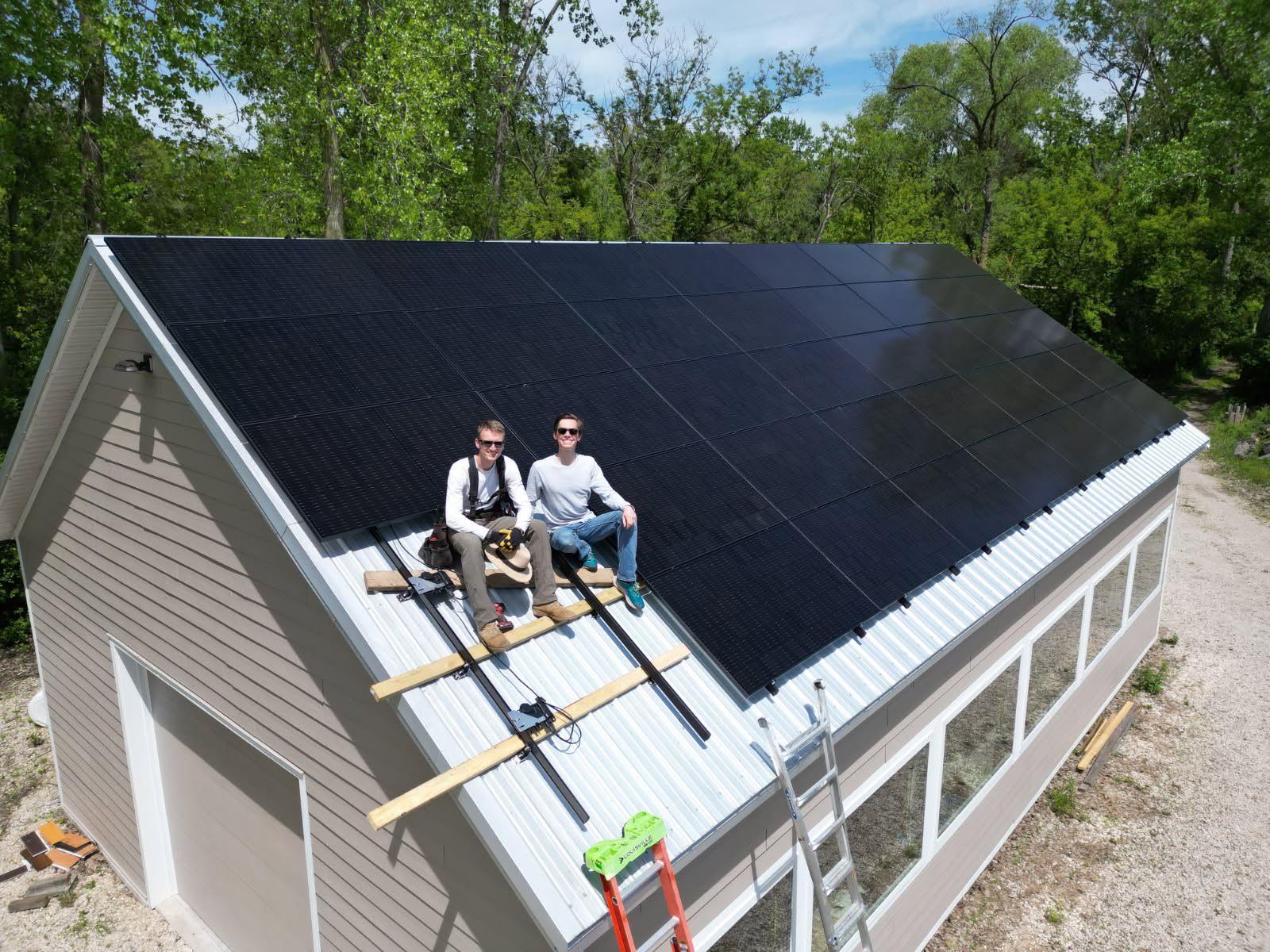
We are able to offer financing for both residential and commercial projects through Michigan Saves, the statewide clean energy financing program and its network of participating lenders.5
Approval, rate, and term come from the lender. What we do is put the project package together so the application reflects the system you are actually buying.
Ask us about it early. It changes which system size makes sense.
From first call to first kilowatt-hour.
No high-pressure appointment. No same-day-only pricing.
- 01
Send us twelve months of usage
A utility bill, a photo of the usage graph, or a data export from Consumers Energy or Great Lakes Energy. That is the input everything else is built on.
- 02
We model the array
Roof planes, tilt, azimuth, shading, and production modeling. Then a system sized to your consumption, with the equipment list spelled out.
- 03
You get real numbers
Cost, expected annual production, and how it lines up against what you pay now. If it does not make sense on your roof, we tell you.
- 04
Permits, interconnection, install
We pull the permits, file the interconnection application with your utility, install, and stay through inspection and permission to operate.
- 05
Monitoring and support
Per-module production monitoring and a documented system package. We are twenty minutes away, not twenty states.
You will work with one of us.
No call center and no commissioned closer. The two people who own the company are the two people who design and stand behind your system.

Jordan Vanderham
Partner — Engineering, ROI, Site Planning
Investments in renewable energy have to make sense.

Preston Smith
Partner — Finance, Legal, Service, People
Love God, love your neighbor, farm photons.
Michigan roofs.
Based in Allendale. West Michigan is home and where most of our work is, and we install across the state — the east side and the Upper Peninsula included. For commercial projects, territory is not the constraint.
Want to understand it before you talk to anyone?
Everything we would tell you on the phone, written down. No gated PDFs and no numbers we cannot stand behind.
- How it works Frequently asked questions Straight answers on cost, winter production, snow, outages, roof damage, resale, permits, and what happens when your installer disappears.
- Money Solar incentives in 2026 The 30% residential federal tax credit expired at the end of 2025. Here is what is actually left for Michigan homeowners and businesses, and what it means for your payback.
- Michigan Net metering in Michigan Michigan replaced true net metering with an inflow/outflow model. What that means for your credits, how large you are allowed to build, and why cooperatives like Great Lakes Energy play by different rules.
- How it works Solar in Michigan winters Snow, lake effect clouds, and short December days are real. Here is how a West Michigan array actually produces across the year, and why the annual number is the one that matters.
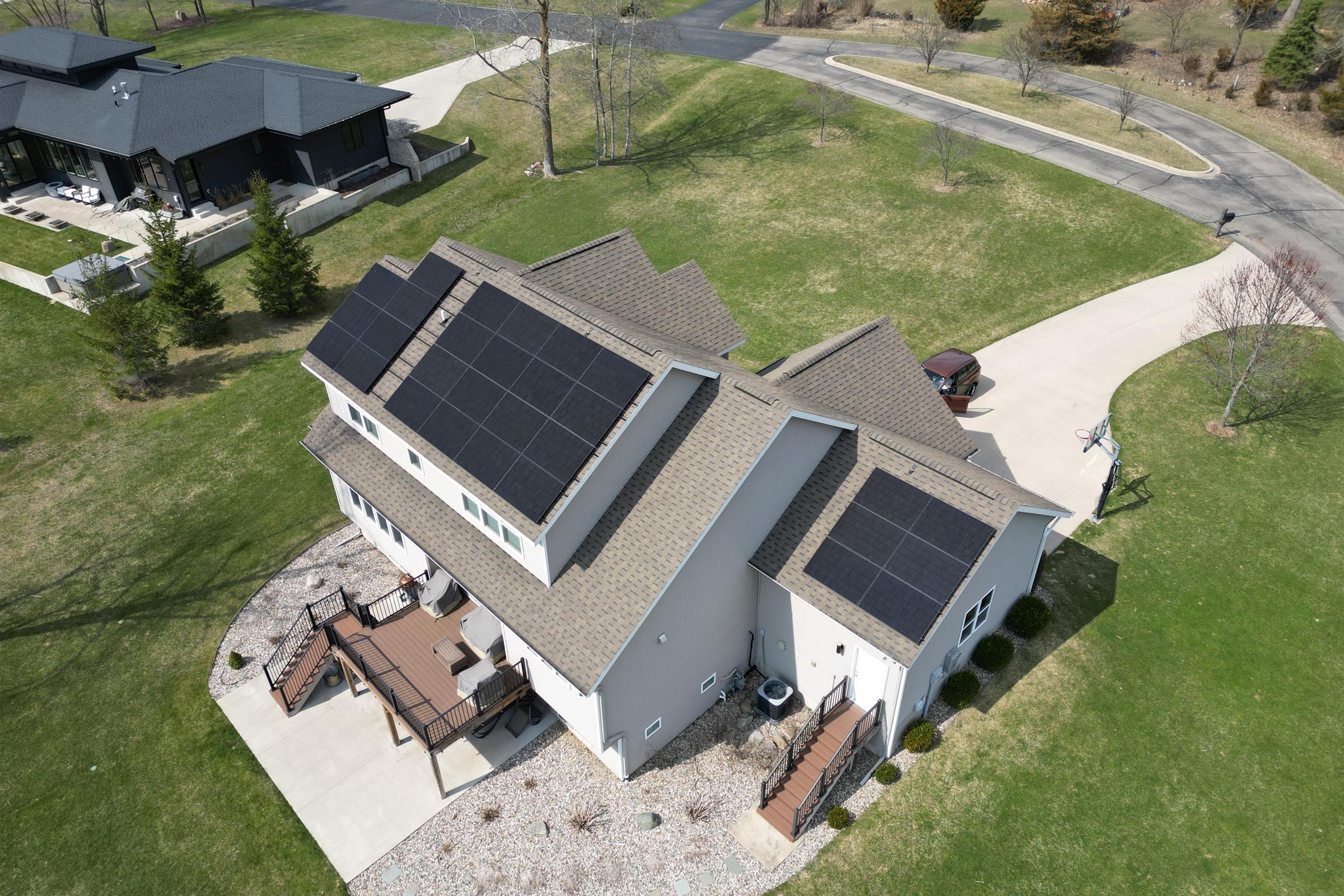
West Michigan, from about two hundred feet up.
Send us a bill. We will send you real numbers.
Twelve months of usage is all we need to model your system properly. No appointment required to get a price.
- Call
- (616) 219-0457
- Jordan@Augustine.Solar
- Office
- 7208 Timbercreek Drive
Allendale, MI 49401
Disclosures
- The federal residential clean energy credit (26 U.S.C. §25D) expired December 31, 2025. Systems had to be installed and placed in service on or before that date to qualify. Nothing on this site is tax advice — confirm your situation with your accountant.
- The Clean Electricity Investment Tax Credit (§48E) remains available to businesses, with a base rate and a higher rate for projects meeting prevailing wage and apprenticeship requirements. Eligibility, timing, and component-sourcing rules are specific to each project and change; we confirm what applies to yours in writing before you sign.
- Michigan's distributed generation program credits energy exported to the grid at a rate below the retail rate, and sizes systems against your own use: up to 110% of your electricity consumption over the past twelve months, with residential projects capped at 550 kW and commercial projects able to go larger. Consumers Energy and DTE separately offer alternative interconnection programs with no size cap that compensate exported energy at a lower rate. Exact terms depend on your utility and current tariff.
- Savings, production, and payback figures shown in any proposal are modeled estimates based on your historical usage, your roof geometry, and current utility rates. Actual results vary with weather, consumption changes, and utility rate changes.
- Financing is offered through Michigan Saves and its participating lenders. Approval, rate, and terms are determined by the lender, not by Augustine Solar.